

WHAT IS A MAMMOGRAM? HOW OFTEN SHOULD WOMEN HAVE A MAMMOGRAM?


A mammogram is referred to as a screening test to identify breast cancer. This test comprises of special X-ray images for detecting abnormal changes or growth in the breast tissue. Using a digital X-ray machine which is specially made for the breast tissue, technicians compress the breast & capture pictures from at least 2 different angles, thus creating a series of images for each breast. The mammogram is this series or set of images. Fatty tissues appear translucent and darer whereas breast tissues appear opaque and white. Several centers do a 3D mammography. This is similar to a regular mammogram, however, many additional images of the breast are captured from several angles for producing a 3D image for radiologists to check.
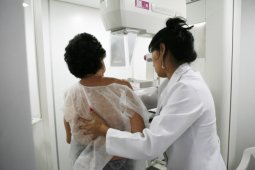
The mammogram is used for identifying lumps or any other finding which is too small to detect during a physical exam. Mammograms help a doctor in determining the next step if growth, lump or a change is noticed in a breast.
Many hospitals in US support screening to begin at the age of 40 years as screening mammograms shall detect the breast abnormalities in the 40s of a woman. Finding from random trails of several women in their 40s & 50s demonstrate that by screening through mammograms there has been a decrease in deaths by breast cancer by 15% – 29%.
However, a mammogram is not perfect. Another study concludes that despite a diagnosis of multiple women with early breast cancer because of the mammogram, number of the women diagnosed with an advanced breast cancer has not gone down. The study also suggested that few women having early breast cancer were diagnosed with cancer which may have never affected their health.
Unfortunately, doctors cannot distinguish breast cancers which are dangerous from the ones which are a life not life-threatening. Therefore, yearly mammograms remain the best way to detect cancer early and lower risks of demise from breast cancer.
The primary concern about mammograms for a breast cancer screening is the possibility of getting a false positive result. This would mean that after the detection of an abnormality and further tests, no cancer is found. This is a major concern to younger ladies in 40s and 50s, who can be very likely to have a false positive result.